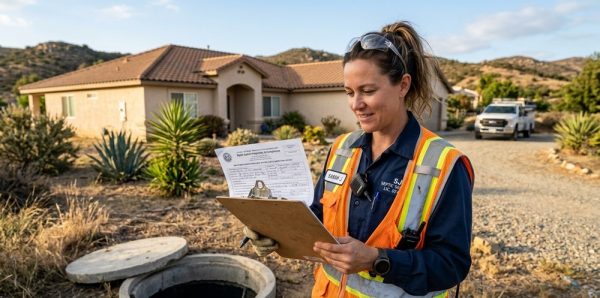
 San Diego County has specific rules for homeowners on private septic systems — and most people on those systems have never read them. San Diego County septic system regulations require annual operating permits, documented pumping records going back six years, and periodic DEH inspections. The penalties for falling out of compliance range from fines to forced system upgrades on a county timeline rather than your own. Dr. Septic San Diego helps residential and commercial clients across all 13 communities we serve stay on the right side of these requirements — without the confusion.
Here is a plain-language breakdown of what the county actually requires, what triggers an inspection, and how to protect yourself from compliance problems before they start.
Who These Rules Apply To
If your home or business is connected to a private on-site wastewater treatment system (OWTS) rather than a municipal sewer line, these regulations apply to you. An estimated 60,000 or more properties in San Diego County rely on private septic systems — concentrated heavily in unincorporated areas of East County and North County Inland, including Ramona, Alpine, Lakeside, Valley Center, and Fallbrook. Properties in cities like El Cajon, Santee, and Escondido may fall under municipal jurisdiction rather than the county DEH directly, but the compliance framework is substantially the same.
If you are unsure whether your property is on septic or sewer, the fastest check is your water bill. Properties on city sewer typically have a sewer service charge on their utility statement. No sewer charge usually means private septic.
The Annual Operating Permit Requirement
Homeowners in unincorporated San Diego County with a private septic system are required to hold a valid annual operating permit issued by the San Diego County Department of Environmental Health (DEH). This is not optional. The permit must be renewed each year, and the fee is tied to your system type and tank size.
Septic annual permit renewal San Diego applications are processed through the DEH Land and Water Quality Division. If your permit has lapsed — which happens more often than you would expect when a home changes hands — you will need to bring the system back into compliance before the county will issue any building permits, ADU applications, or real estate inspection certifications for your property.
Many homeowners inherited a lapsed permit when they purchased their home and had no idea. The seller’s disclosure process does not always catch it. If you have not verified your permit status recently, do it now — before you need it for something time-sensitive.
The Six-Year Pumping Record Requirement
San Diego County requires homeowners to retain pumping service records for their septic system going back six years. These records must document the date of service, the contractor who performed the work, the volume pumped, and the disposal site. This requirement exists so the DEH can verify that systems are being maintained on a reasonable schedule rather than being ignored until they fail.
In practice, this means you should request a written service receipt every time you have your system pumped and keep those records somewhere you can find them. If your system is pumped by a licensed contractor — which is required — you can usually request duplicate records directly from the service provider if yours are lost. Dr. Septic San Diego provides documented service receipts for every pump-out we perform, formatted to meet county record requirements.
Schedule a pump-out and get your service records in order →
What Triggers a DEH Inspection
The DEH does not send inspectors to randomly audit residential septic systems. Inspections are typically triggered by specific events or complaints. Knowing what those triggers are lets you get ahead of them rather than react to them.
- Real estate transactions: A home sale or transfer in San Diego County can trigger a required septic inspection and certification. Buyers and their agents often request this, and some lenders require it. The system must meet county standards at the time of transfer.
- Building permit applications: Any permitted work that adds bedroom count, adds a dwelling unit (ADU or JADU), or expands the footprint of the structure triggers a capacity review.
- Neighbor complaints or health department reports: Sewage odors, surfacing effluent in the yard, or reports of system failure to the DEH can initiate an inspection. The county takes these seriously.
- Permit renewal non-compliance: If your annual permit lapses and you are flagged in the DEH system, an inspection may be required before the permit is reinstated.
OWTS San Diego: Understanding Your System Type
Not all private septic systems in San Diego are the same. The county classifies on-site wastewater systems under the OWTS San Diego regulatory framework, which covers everything from conventional septic tank and drain field systems to alternative treatment units such as aerobic systems, mound systems, and drip irrigation disposal systems.
Your permit requirements, inspection frequency, and upgrade options all depend on which system type you have. Conventional systems — a concrete or plastic tank feeding a standard drain field — are the most common and generally the least complex to maintain. Alternative systems often require a maintenance contract with a licensed service provider as a condition of the operating permit, in addition to annual county reporting.
If you are not sure what type of system you have, a records request to the San Diego County DEH will show your original permit documentation and system design. Dr. Septic San Diego can pull system information for properties in our service area and explain exactly what you are working with during an inspection visit.
San Diego Septic Permit Requirements: Licensed Contractors Only
State law and San Diego County regulations require that septic pumping and service work be performed by a licensed contractor registered with the county. San Diego septic permit requirements prohibit unlicensed operators from pumping tanks or performing system modifications — and the county can audit service records to confirm compliance.
This matters practically because an unlicensed pump-out does not generate a valid service record. If the DEH requests your pumping history and your records reference an unlicensed operator, those records may not satisfy the six-year documentation requirement. Using a licensed contractor from the start protects you from that problem entirely. Dr. Septic San Diego is fully licensed and county-registered for all service areas we cover.
Frequently Asked Questions
How do I check if my annual operating permit is current?
Contact the San Diego County DEH Land and Water Quality Division directly and request a status check on your property’s OWTS permit. You will need your property address and APN (Assessor’s Parcel Number). You can also request a copy of your original system design permit at the same time — this documents your tank size, drain field dimensions, and approved system type.
What happens if I don’t renew my annual operating permit?
Your system technically operates out of compliance with county code. The immediate practical risk is that you will be blocked from obtaining building permits, ADU approvals, or real estate certifications until the permit is reinstated. If the DEH becomes aware of the lapse through a complaint or audit, fines and mandatory inspections can follow.
How often should I pump my tank to stay compliant?
San Diego County does not specify a mandatory pumping interval in its regulations, but DEH guidance aligns with standard industry practice: every three to five years for a typical household, adjusted based on household size and tank volume. A 1,000-gallon tank serving a family of four fills faster than a 1,500-gallon tank serving two people. A professional inspection determines the right interval for your specific system.
Can I sell my home without a septic inspection?
It depends on the transaction terms and your lender’s requirements. Some sales proceed without a formal septic certification, particularly cash transactions where buyers waive the inspection. However, a lender requiring conventional financing will often mandate septic certification before close of escrow. Real estate agents representing buyers in septic areas increasingly request it as a standard condition regardless of financing type.
How Dr. Septic Helps You Stay Compliant Year-Round
Staying current with San Diego County septic system regulations does not have to be complicated. The key elements are simple: hold your annual permit, pump on schedule, keep your service records, and use a licensed contractor every time. Where homeowners run into trouble is usually the same place — they did not know one of these requirements existed until they needed something from the county in a hurry.
Dr. Septic San Diego provides pump-out services with fully documented receipts, certified inspections for real estate transactions and DEH compliance, and straight answers about what your system needs and what it does not. Jerry and the team serve San Diego homeowners and commercial property managers seven days a week — including same-day emergency service. Call before you need us for a deadline, and we will make sure compliance is never what slows you down.
Ready to Get Started?
Whether you need a pump-out with proper documentation, an annual permit inspection, or a compliance evaluation before a real estate transaction, Dr. Septic San Diego has you covered.
Book Your Septic Service or call us at (619) 417-9097.